The Importance of Play and Natural Behaviour
Whether indoors or outdoors, guinea pigs require time outside of their cages to run, play and explore. This will take some getting used to, as they are prey animals and therefore naturally cautious but once it is part of their routine they will look forward to their regular play time.
Grass time
We often get guinea pigs here at the rescue that have never seen grass. The first time they go on grass you'd think you were torturing them! They usually sit in one spot under a hidey looking quite shell shocked. We try to put them out with a friend who is used to grazing as this really helps their confidence. Grass time needs to be built up slowly over a period of days / weeks to avoid bloat. Guinea pigs that have never had floor time will be the same, initially they may freeze or run and hide but keep repeating it daily and with good tasty treats and they'll soon become braver. Obviously English weather means that for a lot of the year, grass time isn't an option, so what can we do instead?
Indoor Play Time
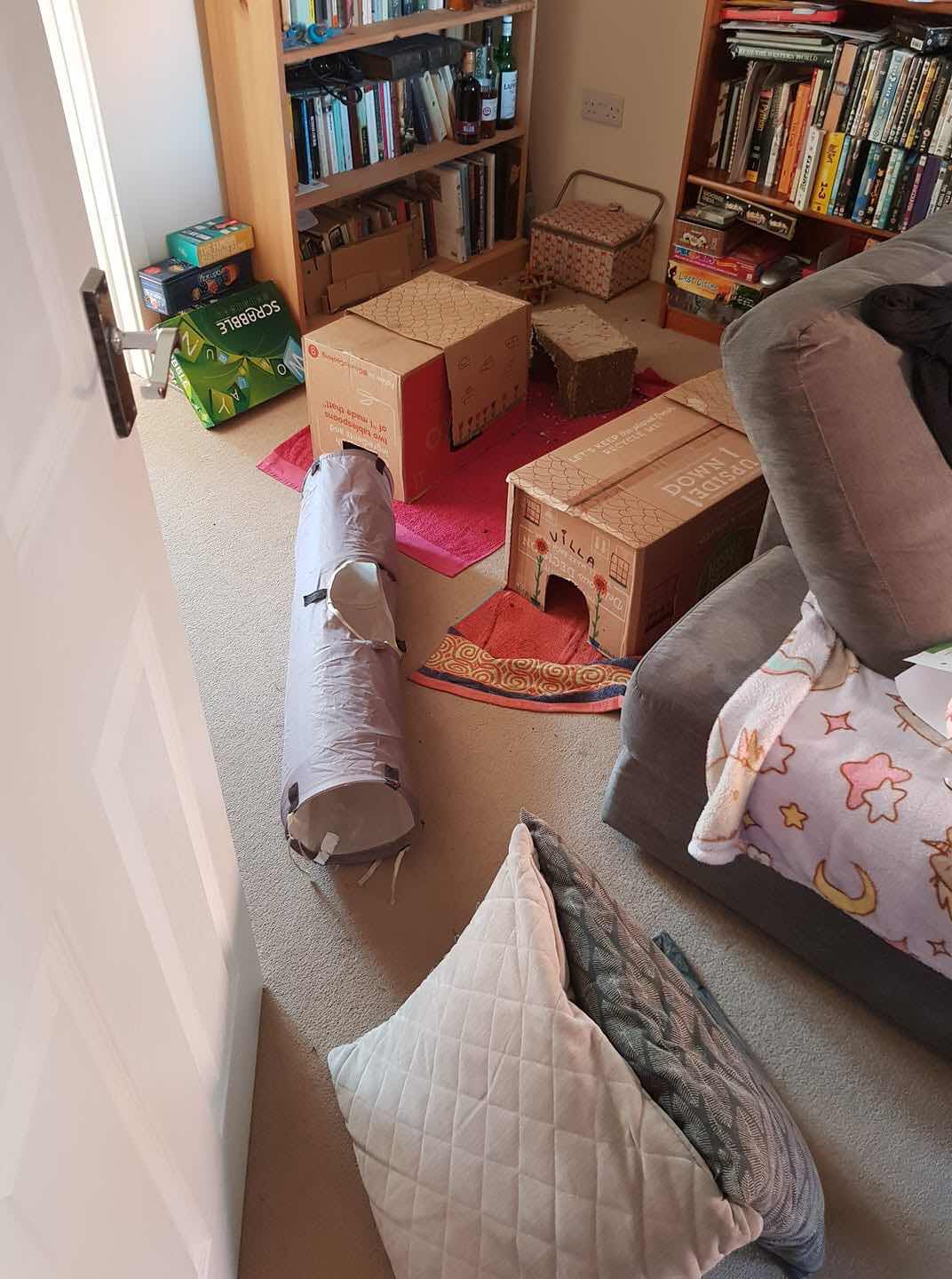
Indoor play time is a great option all year round for indoor piggies. Play pens can be set up cheaply from grids, panels or even a child's ball pit or puppy pen. This gives the guinea pigs a chance to explore and to have a change of scenery while still being safely enclosed. No matter how elaborate their hutch or cage is, they really appreciate the chance to stretch their legs and investigate new things. You'll be surprised at how much they interact with different things in their environment. Free ranging floor time is another option if you have a safe area and don't mind the poops! (or use a large sheet or similar to cover anything precious).
You needn't spend a fortune on toys or enrichment either. A simple brown paper bag filled with yummy hay and herbs or forage will keep a piggy amused for a good while! Toilet rolls stuffed with hay and treats are an all-time favourite here (if you have baby piggies then split the roll down the length to prevent their heads getting stuck!). Treat balls of a small size for rabbits or rats are also fun to experiment with, why not make the guinea pigs work for some of their nugget ration?
Some readers of our rescue page re-use Amazon boxes to make a sort of open maze for their piggies to navigate! We often underestimate how intelligent piggies can be, but if ever in doubt just look at Ace's Tricks on You Tube...
Making guinea pigs 'work' for their food not only keeps them active and alert, it is much better than just presenting them with their pellets in a bowl. Some of our readers don't use bowls at all, they just scatter feed the pellet ration in the hay so that the guinea pigs forage for it while they munch! This is such a simple idea but so effective and doesn't cost a penny more. Guinea pigs usually spend 24 hours a day in a cage or hutch, the least we can do is to ensure they have something to do!
(Outdoor piggies should not be brought indoors for playtime in the colder months as the difference in temperature can really make them unwell. Options for outdoor pigs include a playpen set up in their shed or outbuilding that they can have access to daily).
Lap Time
Lap time is also good bonding time with our pigs and the chance to give a quick health check that might find things hands-on that otherwise would be missed. There are many good suppliers for fleece lap pads (waterproof, in case of wee!) to make lap time more cosy and we really recommend them for children who are getting used to handling pigs as it makes both the pig and the child feel safe.
Trick or Treat?
Many commercial treats that are widely available in pet shops are actually not at all suitable for guinea pigs, despite the packaging suggesting otherwise. Some unsuitable ingredients to avoid are eggs, milk, nuts, and others that are high in sugar (think of it like feeding your children Haribo!). Much better is to feed treats in the form of their daily fruit and veg ration, or dried forage treats which are now very popular and support the small businesses that produce them. Our favourite is Piggie Parcels, not only do the guinea pigs love all of the different forage mixes for treats, they also have dried herb mixes that are for certain conditions such as respiratory mix. Guinea pigs, like other domestic animals, still have the ability to self-medicate if given the option and they will select the things their body needs most from the selection available to them. I especially love Piggie Parcels because they have gone the extra mile (and more!) to make their packaging eco friendly, down to using paper tape and compostable bags. They offer a forage selection box each month (and if you order and put EAGPR in the comments, our rescue piggies receive free forage!). Piggie Parcels recommends sprinkling your chosen forage mix through a big pile of yummy hay, or stuffing hay and forage into a box or tube for them to pull out and sort through. Remember that the bulk (80%) of a guinea pig's diet should be hay, so different ways for them to rummage through hay and find even tastier bits is perfect to make sure you're achieving a good balance.
See Piggie Parcel's January Foraging Adventure box here (and don't forget to mention EAGPR in comments!)
Fresh Forage
Dried forage is fabulous but there are also a lot of good wild plants that can safely be foraged for guinea pigs in the UK (I'm sure elsewhere too, but I can only speak from experience in this country). I'll write more about this in a later blog, but it's very rewarding to learn about wild plants that the guinea pigs will love.
Summary
We owe it to our guinea pigs to allow them to exhibit natural behaviours such as exploring, foraging and grazing in whatever environment we are choosing to keep them in. Hopefully this has given you some ideas of how to enrich their lives without costing a fortune!
Feel free to comment below with your own foraging ideas to share!


